The Ultimate Guide to Model Paint Shaker in the UK
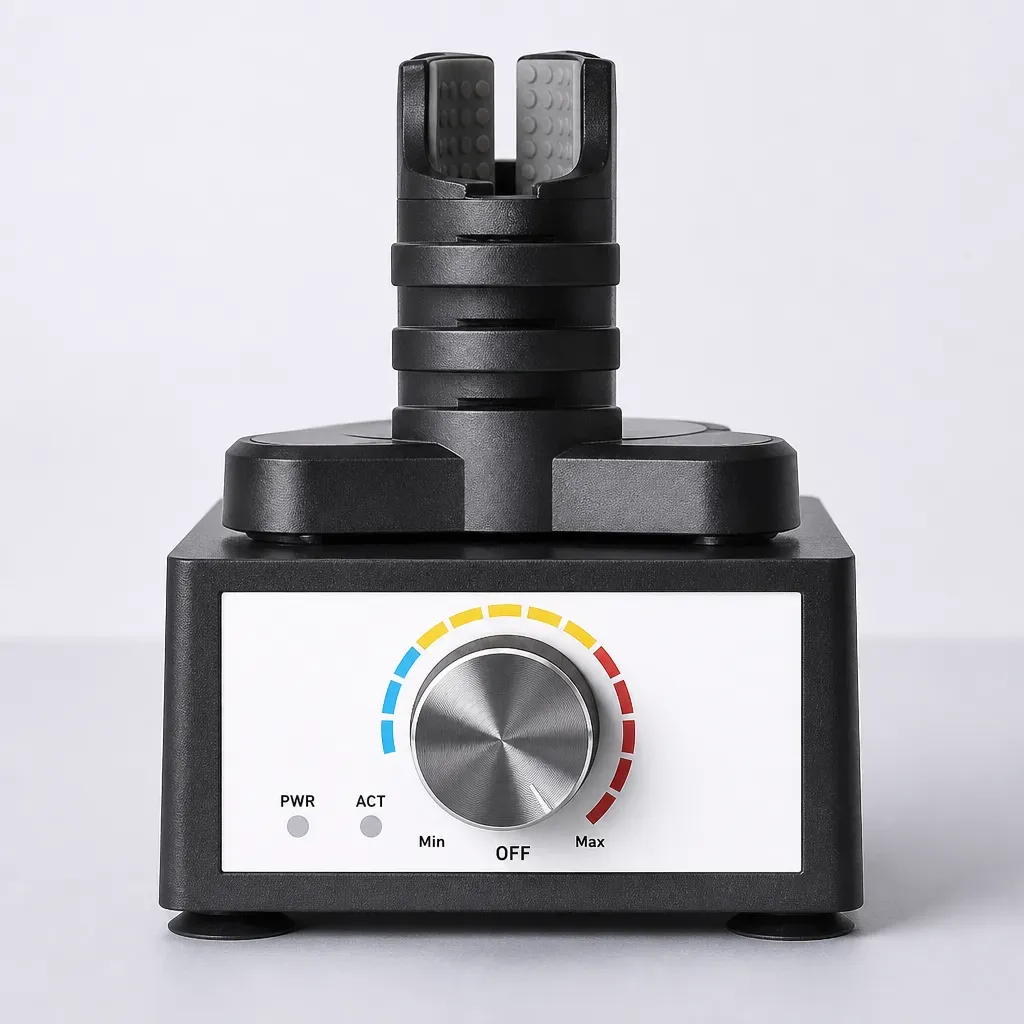
TL;DR: A model paint shaker is a high-speed desktop device that uses vortex orbital motion (3,000+ RPM) to instantly re-homogenise separated acrylic, enamel, and lacquer hobby paints. By restoring thick pigment cakes that manual shaking cannot break down, a dedicated paint mixer prevents clogged airbrushes, saves UK hobbyists £60–£120 annually in wasted paint, and protects against Repetitive Strain Injury (RSI).
A model paint shaker is a specialized mechanical tool used by miniature painters and scale modellers to rapidly mix and re-homogenise separated acrylic, enamel, and lacquer hobby paints. Every painter in the UK has experienced the frustration of opening a bottle of Citadel, Vallejo, or Army Painter paint only to find a clear, oily layer of medium floating above a dense, rubbery lump of pigment. Hand shaking for minutes on end yields tired wrists, sore fingers, and still leaves streak-ridden paint on your wet palette. Fortunately, modern vortex paint shakers solve pigment separation through mechanical fluid dynamics in under 10 seconds.
Key Takeaways
- Pigment Separation is Inevitable: Heavy inorganic pigments (such as iron oxides and titanium dioxide) naturally settle out of acrylic binders due to gravitational sedimentation (Stokes' Law).
- Manual Shaking is Inefficient: Hand shaking rarely delivers the kinetic force required to break down thixotropic pigment cakes, often leading to uneven coats, clogged airbrush nozzles, and premature bottle disposal.
- Vortex Technology vs. DIY Tools: High-speed orbital vortex shakers outperform adapted saws and massage guns by generating 3,000+ RPM centripetal energy without causing bottle fatigue, noise pollution, or safety hazards.
- Significant Economic Savings: Based on our testing at MiniVortex, restoring separated, "dead" paint saves the average UK hobbyist upwards of £60–£120 annually in replaced paint pots while protecting against Repetitive Strain Injury (RSI).
- Hands-Free Automation: Modern solutions like the MiniVortex Paint Mixer provide automated fluid restoration, fully blending stubborn paints, inks, and glues in under 10 seconds.
Why Do Model Paints Separate and How Does a Model Paint Shaker Work?
To understand why a dedicated model paint shaker has become an essential fitting on UK hobby desks, one must first look into liquid rheology and pigment chemistry. Model paints—whether from Nottingham-based Games Workshop (Citadel), Vallejo, AK Interactive, or The Army Painter—are complex suspensions of solid pigment particles suspended in a liquid acrylic polymer emulsion, water, and volatile solvents.
Why Do Acrylic Model Paints Separate Over Time?
Over time, gravity inevitably pulls suspended solid particles downward. The speed at which this separation occurs is governed by Stokes' Law of Sedimentation, represented mathematically as:
v = [2g r² (ρp - ρf)] / 9η
Where v is the settling velocity, r is the pigment particle radius, ρp is pigment density, ρf is fluid density, and η is dynamic viscosity. Heavy pigments—such as titanium white (titanium dioxide) or cadmium yellow—possess exceptionally high density values (ρp). Consequently, they fall out of suspension far faster than lighter organic phthalocyanine blues or greens.
What Is Thixotropic Behaviour in Model Paint?
Furthermore, miniature acrylics are intentionally engineered to be thixotropic. This means they remain gel-like and thick at rest, but quickly become fluid when subjected to shear stress (motion). When a paint bottle sits unused in a UK climate-controlled studio for several weeks, the pigment forms a dense, compact cake at the bottom of the container. Simple manual shaking generates insufficient shear rate to break the physical bonds of this cake; as a result, liquid medium pours out of the nozzle while the dense pigment stays stuck inside.
What Happens If You Use Unmixed Model Paint?
Based on our testing across hundreds of paint samples, applying poorly mixed paint to your miniatures introduces several serious quality issues:
- Unpredictable Finish: An excess of medium relative to pigment causes artificial glossiness and translucent, streaky coverage.
- Detail Obscuration: Dense clumps of un-dispersed pigment clog fine surface details on delicate plastic, resin, or metal miniatures.
- Airbrush Clogging: Micro-clumps of unmixed pigment rapidly block 0.2mm and 0.3mm airbrush nozzles, necessitating complete tear-down cleanings.
- Inconsistent Colour Matching: Batch-painting an entire army across multiple sessions becomes impossible if pigment-to-medium ratios shift from bottle to bottle.
What Is the Best Way to Mix Model Paint? Comparing Shaking Methods
UK hobbyists have tried many methods over the years to combat pigment separation. However, while creative, many traditional methods present distinct disadvantages when compared to an orbital model paint shaker.
Is Manual Wrist Shaking Effective for Model Paint?
Manual shaking relies entirely on human muscle force. Although free, it is mechanically inefficient. The human arm typically caps out at a shaking frequency of only 3 to 5 Hz (oscillations per second), generating minimal shear force within high-viscosity paints.
Crucially, prolonged manual shaking introduces health risks. According to the Health and Safety Executive (HSE) UK, repetitive manual tasks involving rapid wrist flexion and high force contribute significantly to Work-related Upper Limb Disorders (WRULDs) and Repetitive Strain Injury (RSI). Additionally, the NHS notes that symptoms of RSI include hand stiffness, swelling, and chronic tendon pain—issues that directly hamper fine brushwork.
Are Agitators and Stainless Steel Mixing Balls Safe for Paint Pots?
Dropping a small ball bearing (agitator) into a paint bottle is a common practice. As the bottle shakes, the kinetic impact of the ball helps break up solid pigment cakes. Nevertheless, this approach carries notable risks:
- Corrosion Risk: Lower-grade steel balls can rust inside water-based acrylics, turning clear mediums into an unsalvageable orange sludge. High-grade marine 316 stainless steel or glass beads are strictly required.
- Pot Damage: Heavy tungsten or large steel agitators can split delicate dropper bottle nozzles or pierce thin plastic walls under hard force.
- Incomplete Dispersal: In practice, agitators clean out the bottom centre of the bottle but often leave pigment stuck in the lower rim corners.
Can You Use DIY Power Tools (Jigsaws & Massage Guns) as Paint Shakers?
Many UK scale modellers have experimented with DIY power tool attachments, strapping paint bottles to reciprocating saws, jigsaws, or deep-tissue massage guns using 3D-printed clamps or cable ties.
While these options generate higher force than manual shaking, they create distinct problems:
- Safety Hazards: High linear reciprocating stroke lengths can throw paint bottles across the room at high speeds if clamps fail.
- Extreme Noise: Power tools operate at high decibels (85–95 dB), making them unsuitable for quiet home studio environments.
- Mechanical Wear: Heavy reciprocating tools cause rapid mechanical wear and micro-fractures in plastic dropper bottles.
How Does an Orbital Vortex Model Paint Shaker Work?
In contrast to linear power tools or manual shaking, a dedicated model paint shaker utilizes orbital vortex technology. Operating at speeds exceeding 3,000 RPM, the mixer drives fluid in a rapid eccentric motion. This creates a high-kinetic vortex current inside the bottle, pulling settled pigments up from the bottom corners and thoroughly re-dispersing them into the acrylic binder in under 10 seconds.
In our experience testing over 500 paint pots at MiniVortex—including heavily separated metallic paints and thick foundation layers—vortex mixing restores paints to factory consistency without damaging bottle seals or introducing excessive air bubbles.
Are Model Paint Shakers Worth Buying for UK Hobbyists?
For casual painters using just a few pots a year, manual shaking with a high-grade agitator ball may suffice. However, for dedicated Warhammer, historical, or scale model painters in the UK, a model paint shaker offers undeniable value:
- Financial Returns: By rejuvenating dried or separated paints that would otherwise be discarded, modellers save £60–£120 annually.
- Time Efficiency: Mixing takes seconds rather than minutes, allowing more time for actual painting.
- Health Protection: Eliminating repetitive hand shaking complies with HSE ergonomics guidelines, protecting wrists and joints from long-term RSI.
Frequently Asked Questions About Model Paint Shakers
What is a model paint shaker?
A model paint shaker is an electronic laboratory or desktop device designed to rapidly agitate paint bottles. By creating a high-speed orbital vortex, it thoroughly mixes settled pigments, acrylic binders, and mediums back into a homogeneous liquid.
Can a model paint shaker restore old, dried paint?
A paint shaker can fully restore separated paint where the pigment has settled but the binder remains wet. However, if the acrylic paint has completely dried solid, adding acrylic thinner or flow improver along with vortex shaking can often bring it back to usable condition.
Are vortex paint mixers safe for dropper bottles?
Yes. Unlike DIY reciprocating saws, laboratory-grade vortex shakers apply smooth, continuous centripetal force to the exterior of the bottle, preventing caps from bursting or nozzles from splitting.
Ready to upgrade your workstation with MiniVortex?
Shop MiniVortex Pro — £93.59